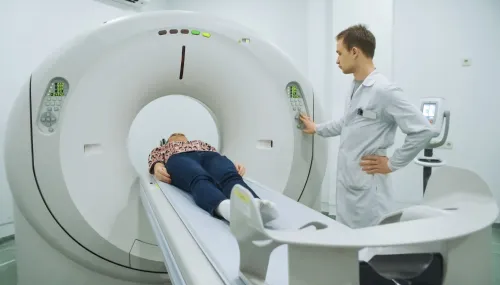

When a doctor recommends an X-ray, patients often focus on getting the test completed quickly. Speed matters in some situations, but the usefulness of Digital X-Ray imaging also depends on whether the correct body part and views are captured, image quality is adequate, and the findings are interpreted in the context of the clinical problem.
For patients in Panchkula, Haryana, knowing what digital radiography can and cannot show helps set realistic expectations.
What Digital X Ray Is Commonly Used For
Digital radiography uses X-rays to create images that can be viewed electronically rather than relying on traditional film processing.
It is commonly used to assess fractures, joint alignment, certain chest conditions, spinal changes, and other bone or soft-tissue findings where radiography is clinically appropriate.
Digital technology allows images to be viewed and transferred efficiently within a healthcare setting, which can help clinicians integrate imaging into diagnosis and treatment planning.
What Happens During the Test
The radiographer positions the relevant body part according to the requested examination.
More than one view may be required because a single two-dimensional image does not always provide enough information about a three-dimensional structure.
The actual exposure takes only a short time. However, positioning can take longer when a patient has pain, limited mobility, or an injury.
Patients should remain still when instructed because movement can reduce image clarity.
How Much Recovery Is Required
Routine diagnostic X-rays are non-invasive and generally require no recovery period.
Patients can usually return to their normal activities immediately unless their underlying injury or medical condition itself requires restrictions.
The test uses ionising radiation, so exposure should have a clinical purpose and appropriate radiation protection principles are followed.
Important Information Before Imaging
Patients should inform the imaging team if pregnancy is possible because this may affect how an examination is planned depending on the body area and clinical urgency.
They should also clearly identify the area being investigated and provide relevant previous imaging when requested.
An X-ray does not answer every diagnostic question. Ligaments, tendons, nerves, discs, and other soft tissues may require different imaging techniques when clinically indicated.
Choosing Imaging Based on Clinical Need
A useful diagnostic service is not simply one that produces an image. The examination should correspond to the clinical question.
The Bliss Hospital provides hospital-based diagnostic support where imaging findings can be considered alongside medical or surgical evaluation when required.
For patients seeking digital X-ray services in Panchkula, useful questions include what examination has been requested, whether preparation is necessary, when results are expected, and whether additional imaging could be required based on the findings.
Digital radiography can provide valuable information quickly, but its real clinical value comes from selecting the appropriate examination and interpreting the results as part of a wider diagnostic assessment rather than treating the image as an isolated answer.
Keywords